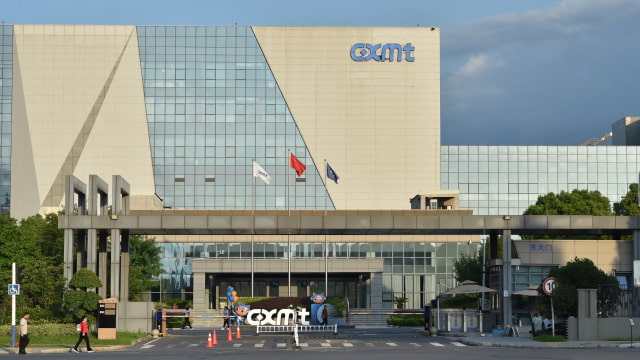
Apple has been testing memory chips from China's ChangXin Memory Technologies (CXMT) in iPhones and MacBooks and has held early talks with the company about supplying memory chips, according to a report from The Wall Street Journal. Apple hopes to secure White House approval before using them in some devices sold in China as booming AI demand continues to tighten global memory supplies.
The testing now spans both iPhones and MacBooks. HP and Acer have already begun shipping devices with the company's memory chips outside the United States.
Any potential supply agreement faces significant regulatory hurdles. Federal export rules prohibit U.S. companies from transferring technology to CXMT, including detailed discussions about technical specifications and product design. Kevin Wolf, an export lawyer at Akin Gump, told the Journal that Apple can buy off-the-shelf CXMT components and negotiate pricing, but it cannot commission custom designs. Because Apple typically works with suppliers to develop memory tailored to its devices, the restrictions effectively prevent it from ordering custom chips from CXMT. Using standard parts instead could force Apple to redesign portions of its hardware or accept performance trade-offs.
Political opposition has also intensified. A bipartisan group of senators led by Chuck Schumer recently demanded Apple reject Chinese memory chips, setting an August 21 deadline for a response. The lawmakers warned that even qualifying CXMT parts for devices sold outside the U.S. could undermine domestic chip production. Apple's earlier push to lobby the Trump administration for clearance faced sharp opposition from Micron, which argued such a move would threaten the domestic industry.
Securing regulatory approval would not solve Apple's supply problem. CXMT has already maxed out its production capacity for the year and is prioritizing domestic technology companies including ByteDance, Tencent, and Xiaomi, leaving little room for new international customers. Its prices are roughly level with, and sometimes above, those of Micron, SK Hynix, and Samsung. Global DRAM supply is so tight that the three largest manufacturers have already sold out their entire 2027 production.
The memory shortage has already had tangible consequences for Apple. CEO Tim Cook described the situation as a "hundred-year flood," and the company raised prices across Macs, iPads, and other products in June.
Get the iClarified Daily Newsletter
Apple news, rumors, tutorials, price drop alerts, in your inbox every evening, free.
Unsubscribe at any time.
Success!
You have been subscribed.
Add Comment
Would you like to be notified when someone replies or adds a new comment?
Yes (All Threads)
Yes (This Thread Only)
No
Notifications
Would you like to be notified when we post a new Apple news article or tutorial?



![Apple Highlights Child Safety and Screen Time Controls in New Ad [Video]](/images/news/102393/102393/102393-160.jpg "Apple Highlights Child Safety and Screen Time Controls in New Ad [Video]")









![Magic Keyboard for iPad Air Drops to $200 on Amazon [Deal]](/images/news/102402/102402/102402-160.jpg "Magic Keyboard for iPad Air Drops to $200 on Amazon [Deal]")
![13-Inch M5 MacBook Air With 1TB Drops to $1,449 on Amazon [Deal]](/images/news/102345/102345/102345-160.jpg "13-Inch M5 MacBook Air With 1TB Drops to $1,449 on Amazon [Deal]")