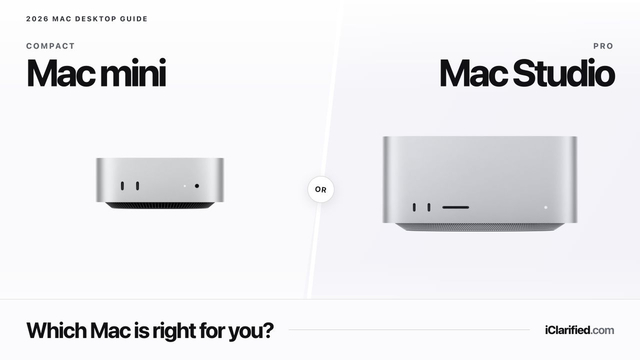
Choosing between the new Mac mini and Mac Studio is no longer just a question of small desktop versus powerful desktop. Apple's 2026 lineup creates a meaningful overlap between the $1,699 Mac mini with M5 Pro and the $2,499 Mac Studio with M5 Max. The extra $800 buys substantially more GPU performance, memory bandwidth, ports, and cooling—but not more base storage.
At the lower end, the $899 Mac mini with M6 is the best fit for most buyers. At the top, Mac Studio with M5 Ultra is in a different class, supporting up to 512GB of unified memory and eight displays for the most demanding AI, video, 3D, and scientific workloads.
Here is how all four new Apple desktop configurations compare and where it makes sense to step up.
The best new Apple desktop for everyday work, school, coding, media, and light creative projects
The lowest starting price at $899
A tiny 1.5-pound computer that still supports up to three displays
Choose Mac mini with M5 Pro if you want:
Much stronger CPU performance, Thunderbolt 5, and up to 64GB of memory
A compact development, music, photography, or moderate video workstation
Pro performance without paying $2,499 for Mac Studio
Choose Mac Studio with M5 Max if you want:
Far more GPU performance and up to 128GB of unified memory
More media engines, ports, 10Gb Ethernet, an SDXC slot, and support for five displays
Sustained performance for video, 3D, VFX, game development, and local AI
Choose Mac Studio with M5 Ultra if you want:
Up to 512GB of unified memory and 1.2TB/s memory bandwidth
Maximum CPU, GPU, AI, and media performance
Up to eight displays or four 5K/120Hz Studio Display XDR monitors
2026 Mac mini vs Mac Studio Specs Comparison
Feature
Mac mini (M6)
Mac mini (M5 Pro)
M5 Max
M5 Ultra
Starting Price
$899
$1,699
$2,499
$5,499
Base Memory / Storage
16GB / 256GB
24GB / 512GB
36GB / 512GB
96GB / 1TB
CPU
12-core
15-core; up to 18-core
18-core
30-core; up to 36-core
GPU
12-core
16-core; up to 20-core
32-core; up to 40-core
64-core; up to 80-core
Memory Bandwidth
153GB/s with 16GB; 170GB/s with 24GB or 32GB
307GB/s
460GB/s; 614GB/s with 40-core GPU
1.2TB/s
Maximum Memory
32GB
64GB
128GB (with 40-core GPU)
512GB (with 36-core CPU/80-core GPU)
Maximum Storage
2TB
8TB
8TB
16TB
Rear Thunderbolt Ports
3× Thunderbolt 4
3× Thunderbolt 5
4× Thunderbolt 5
4× Thunderbolt 5
Front Ports
2× USB-C; headphone
2× USB-C; headphone
2× USB-C; SDXC
2× Thunderbolt 5; SDXC
USB-A
No
No
2
2
Ethernet
2.5Gb; optional 10Gb
2.5Gb; optional 10Gb
10Gb standard
10Gb standard
External Displays
Up to 3
Up to 3
Up to 5
Up to 8
Size
5 × 5 × 2 inches
5 × 5 × 2 inches
7.7 × 7.7 × 3.7 inches
7.7 × 7.7 × 3.7 inches
Weight
1.5 lb
1.6 lb
6.0 lb
8.0 lb
What Each Step Up Actually Costs
The $899 Mac mini with M6 is the value entry point, although its 256GB SSD is tight for a desktop expected to last several years. Moving to Mac mini with M5 Pro costs another $800 and doubles base storage to 512GB, raises memory from 16GB to 24GB, adds substantially more CPU power and memory bandwidth, and replaces the three rear Thunderbolt 4 ports with Thunderbolt 5.
The next $800 jump—from the $1,699 M5 Pro Mac mini to the $2,499 M5 Max Mac Studio—is the most important decision in the lineup. Both begin with a 512GB SSD, but Mac Studio raises base memory from 24GB to 36GB, doubles GPU cores from 16 to 32, raises bandwidth from 307GB/s to 460GB/s, and adds another rear Thunderbolt 5 port, two USB-A ports, 10Gb Ethernet, and an SDXC slot.
Mac Studio with M5 Ultra is a $3,000 jump from M5 Max. Its base memory rises from 36GB to 96GB, storage doubles to 1TB, GPU cores double from 32 to 64, and bandwidth climbs from 460GB/s to 1.2TB/s. That is not a mainstream upgrade; it is a workstation tier for workloads that can use the hardware continuously.
The large June price increase changes how the new generation should be judged. Immediately before replacement, Apple charged $799 for the base M4 Mac mini, $1,599 for M4 Pro, $2,499 for M4 Max Mac Studio, and $5,299 for M3 Ultra Mac Studio. Against those revised prices, the replacements cost $100 more, $100 more, the same, and $200 more, respectively. Launch-to-launch comparisons are much larger, but they do not describe what an Apple customer would have paid the day before the new lineup arrived.
Previous-generation models may offer better value while stock lasts, but retailer pricing and availability can change quickly. The outgoing M4 Max and M3 Ultra Mac Studio models were already scarce at major third-party retailers.
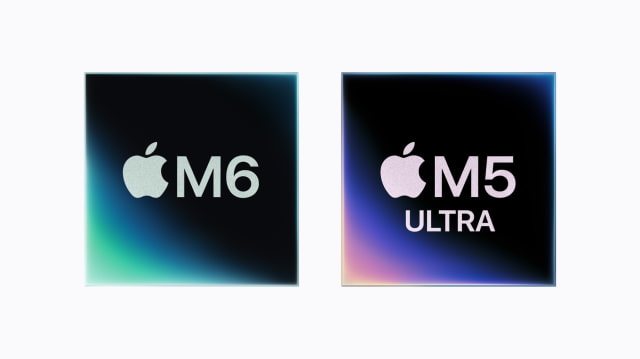
M6 is the newest architecture in the group and includes two super cores, four performance cores, and six efficiency cores. That makes the base Mac mini highly responsive for everyday and lightly threaded work. It also has a 12-core GPU with Neural Accelerators, which is a major step up for its class.
M5 Pro is the better fit for CPU-heavy professional work. Its base configuration has 15 CPU cores and 16 GPU cores, while the top chip reaches 18 CPU cores and 20 GPU cores. Developers compiling large projects, musicians running large sessions, and creators doing regular exports can benefit without needing Mac Studio.
Mac Studio with M5 Max changes the balance. Its 18-core CPU is paired with 32 or 40 GPU cores, two video encode engines, and two ProRes encode/decode engines. It is much better suited to 3D rendering, VFX, game development, high-resolution video, and workloads that must remain fast for hours rather than minutes.
M5 Ultra doubles much of the M5 Max architecture. It reaches 36 CPU cores and 80 GPU cores, with two video decode engines, four video encode engines, and four ProRes encode/decode engines. Apple says it can play as many as 33 streams of 8K ProRes 422 video at 30 fps.
Local AI: Memory Capacity Matters More Than the Name
All four chips include Neural Accelerators in their GPU cores, so every model is designed to run modern AI workloads locally. The practical limit is often unified memory.
Mac mini with M6 tops out at 32GB, enough for smaller local models and everyday AI features. Its 16GB configurations provide 153GB/s of memory bandwidth, while the 24GB and 32GB configurations provide 170GB/s. M5 Pro doubles the memory ceiling to 64GB and provides 307GB/s of bandwidth, making it a much more capable local-AI development machine.
M5 Max supports up to 128GB and 614GB/s when configured with the 40-core GPU. That is the point where larger models, high-resolution image and video generation, and heavier training or fine-tuning workflows become more comfortable on one desktop.
M5 Ultra reaches 512GB with the 36-core CPU and 80-core GPU configuration, and provides 1.2TB/s of memory bandwidth, allowing enormous open-weight models and datasets to remain entirely in unified memory. It is the only current option here for buyers who know they need more than 128GB. Apple says the 512GB configuration will arrive in late October.
Both M5 Pro Mac mini and Mac Studio can use Thunderbolt 5 to cluster multiple Macs for larger AI jobs. Mac Studio also supports RDMA; Apple says a four-system cluster can deliver up to three times faster distributed AI inference than a single system.
Video, Photography, Music, and 3D Work
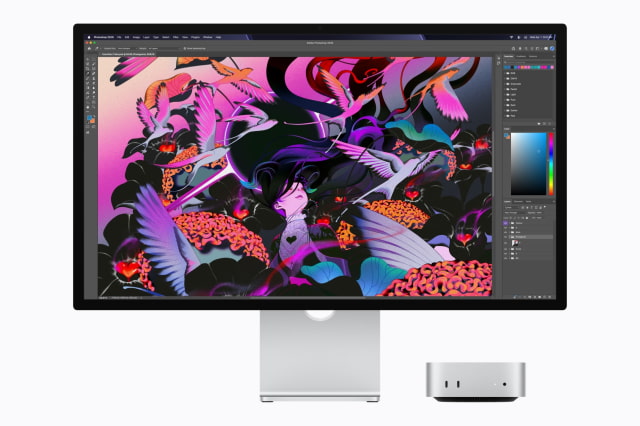
Photography and design: M6 is sufficient for most photographers and designers. Step up to M5 Pro for large batches, heavier AI upscaling, or sustained professional work. Mac Studio becomes worthwhile when GPU-heavy effects or large memory requirements dominate the workflow.
Music production: M5 Pro Mac mini is likely the sweet spot for many producers because CPU, memory, and Thunderbolt connectivity matter more than a huge GPU. Mac Studio is useful for extremely large projects, expansion-heavy studios, or users who also work in video and 3D.
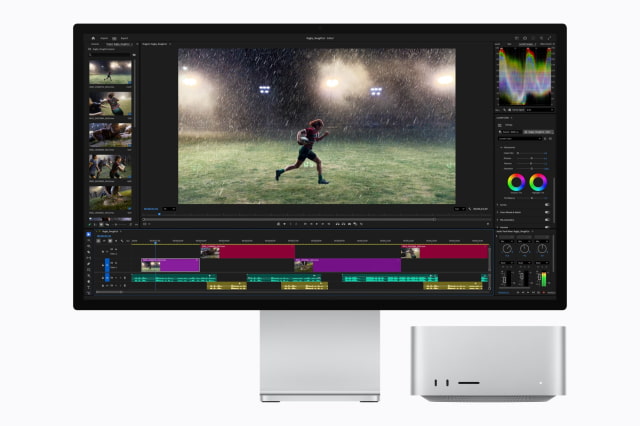
Video editing: M5 Pro Mac mini can edit demanding ProRes projects, but Mac Studio has more encode/decode engines and more sustained thermal capacity. M5 Max is the better choice for frequent high-resolution multicam work, effects, and color grading. M5 Ultra is for exceptional timelines, very high stream counts, or environments where export time directly affects revenue.
3D, VFX, and game development: Choose Mac Studio. The jump from a 16-core GPU in the base M5 Pro mini to 32 cores in the base M5 Max Studio is substantial, and Studio scales to 80 GPU cores. These workloads are where the $800 step from M5 Pro mini to M5 Max Studio is easiest to justify.
Ports and Displays
Mac mini has five USB-C ports in total, HDMI, Ethernet, and a headphone jack. The M6 model uses Thunderbolt 4 on the rear; M5 Pro uses Thunderbolt 5. Both support up to three external displays and include 2.5Gb Ethernet, configurable to 10Gb.
Mac Studio adds a fourth rear Thunderbolt 5 port, two USB-A ports, standard 10Gb Ethernet, and an SDXC card slot. The front USB-C ports run at 10Gb/s on M5 Max and at Thunderbolt 5 speeds on M5 Ultra. M5 Max supports five displays, while M5 Ultra supports eight.
Every new model includes Wi-Fi 7, Bluetooth 6, Thread, HDMI, and USB-C genlock. If you need several displays, legacy USB-A hardware, camera cards, or 10Gb networking, Mac Studio's built-in connectivity can reduce the number of hubs and adapters on your desk.
Size, Noise, and Sustained Performance
Mac mini is dramatically smaller and lighter: 5 inches square, 2 inches tall, and no more than 1.6 pounds. Mac Studio is 7.7 inches square, 3.7 inches tall, and weighs 6 or 8 pounds depending on chip.
Both use active cooling and are designed to run demanding work quietly. Mac Studio's much larger enclosure and thermal system are built for higher-power chips and long sustained loads. If the computer will spend much of its day rendering, exporting, training, or compiling, Studio's cooling headroom matters. If your heavy work is intermittent, Mac mini is easier to place and carry while still delivering considerable performance.
Mac mini vs Mac Studio: Which Should You Buy?
Best for most people: Mac mini with M6. It handles everyday productivity, school, coding, home use, and moderate creative work while supporting three displays. Consider more than 256GB of storage if this will be your primary computer.
Best value for many professionals: Mac mini with M5 Pro. It offers much more CPU performance, Thunderbolt 5, and up to 64GB of memory in the same tiny enclosure. It is especially compelling for development, music production, photography, and workloads that are demanding but not dominated by the GPU.
Best all-around workstation: Mac Studio with M5 Max. The $800 premium over the base M5 Pro mini buys twice the GPU cores, more memory and bandwidth, stronger media hardware, more ports, and greater sustained-performance headroom. If those differences match your daily work, the upgrade is easy to defend.
Best only for extreme workloads: Mac Studio with M5 Ultra. Buy it for more than 128GB of memory, maximum local-AI capacity, eight-display setups, or high-end video, VFX, 3D, and scientific workflows. It is excessive for ordinary productivity and most creative projects.
The new Mac mini and Mac Studio are available to preorder now and begin arriving September 22.
Compare Current Mac Prices
Before choosing a configuration, check the iClarified Mac Price Tracker for current prices and availability across Apple and major retailers.



![Apple-LG Home Accessories Could Offer Dynamic Island Proximity Controls [Leak]](/images/news/102711/102711/102711-160.jpg "Apple-LG Home Accessories Could Offer Dynamic Island Proximity Controls [Leak]")




![How To Force Restart iPhone [Video]](/images/tutorials/95012/95012/95012-160.jpg "How To Force Restart iPhone [Video]")
![How To Turn Off iPhone [Video]](/images/tutorials/94999/94999/94999-160.jpg "How To Turn Off iPhone [Video]")
![How To Back Up Your iPhone to an External Drive on Mac [Video]](/images/tutorials/72786/72786/72786-160.jpg "How To Back Up Your iPhone to an External Drive on Mac [Video]")





![Mac mini Drops to $779.99 for Prime Big Deal Days [Deal]](/images/news/102624/102624/102624-160.jpg "Mac mini Drops to $779.99 for Prime Big Deal Days [Deal]")