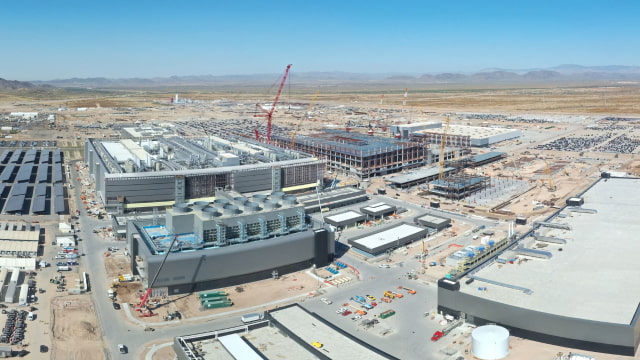
Apple supplier TSMC says it is speeding up construction of its second and third chip plants in Arizona by "several quarters" to meet strong demand for smartphone and AI chips from its U.S.-based customers.
In an earnings conference on Thursday, TSMC Chairman and CEO C.C. Wei told investors and reporters that the company is moving forward with its Arizona expansion, reports Nikkei. The effort is part of a previously announced $100 billion investment to build five more facilities in the state, including the two chip packaging plants, the advanced 2-nanometer production, and an R&D center, reports Nikkei. "After completion, around 30% of our 2-nanometer and more advanced [chip] capacity will be located in Arizona, creating an independent, leading-edge semiconductor manufacturing cluster in the U.S.," Wei said. He added that the two planned packaging facilities will "complete the AI supply chain" in the U.S.
The company also reported a record net profit of NT$398.27 billion (approximately $12.82 billion USD) for the April-June quarter, a 60.7% increase from the same period last year, thanks to the ongoing AI boom. TSMC expects to report record revenue of between $31.8 billion and $33 billion for the current quarter, but noted it is being more "conservative" about the last quarter of 2025 due to uncertainties including the potential impact of tariff policy. Operating and gross margins are estimated to decrease to 45.5% and 47.5% respectively, down from a range of 55.5% to 57.5%, primarily due to unfavorable foreign exchange rates and higher overseas operating costs.
Wei also commented on the U.S. recently easing restrictions on downgraded AI chips designed for the Chinese market—a reversal of a stricter ban from April. He described the move as "very positive news" for both TSMC and its customers, though he added the company will not increase its forecast for now. Nvidia CEO Jensen Huang recently called the export controls "a failure" and said his company hopes to supply more advanced chips to China. Meanwhile, leading equipment maker ASML expressed caution about the outlook beyond AI, stating it cannot confirm if growth will continue into 2026.
According to Nikkei, many of China's leading tech companies, including ByteDance and Alibaba, had already stockpiled billions of dollars' worth of chips before the initial U.S. ban. Morgan Stanley analyst Charlie Chan noted that while TSMC is expected to raise its revenue forecast due to strong AI demand, uncertainties remain, including how the U.S. government will impose tariffs on semiconductors.




![watchOS 27.0.1 Fixes Unexpected Restarts on Series 12 and Ultra 4 [Download]](/images/news/102378/102378/102378-160.jpg "watchOS 27.0.1 Fixes Unexpected Restarts on Series 12 and Ultra 4 [Download]")
![Near-Borderless Anniversary iPhone Pro Still on Track Despite Display Tech Delays [Report]](/images/news/102375/102375/102375-160.jpg "Near-Borderless Anniversary iPhone Pro Still on Track Despite Display Tech Delays [Report]")
![Apple Developing Screenless Health and Fitness Tracker With Fabric Band [Report]](/images/news/102372/102372/102372-160.jpg "Apple Developing Screenless Health and Fitness Tracker With Fabric Band [Report]")






![13-Inch M5 MacBook Air With 1TB Drops to $1,449 on Amazon [Deal]](/images/news/102345/102345/102345-160.jpg "13-Inch M5 MacBook Air With 1TB Drops to $1,449 on Amazon [Deal]")