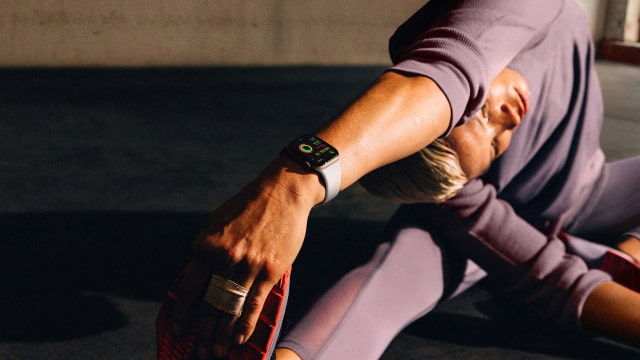
Apple is facing mounting pressure to revitalize its health and wearables strategy as consumer interest increasingly shifts toward screenless fitness trackers and AI-driven insights. With the Apple Watch now over a decade old, the company is navigating a changing market where traditional smartwatches are losing momentum to simpler devices centered around passive health tracking.
According to Mark Gurman, Apple risks falling behind in an industry it helped shape. While the Apple Watch remains a major revenue driver, more consumers are gravitating toward screenless options. Competitors like Oura and Whoop have built successful multibillion-dollar businesses around minimalist rings and bands focused on sleep, recovery, and coaching features. Apple has also steadily lost health and hardware talent to Oura, including its former head of home hardware. Google is also reportedly moving into the category with a screenless Fitbit Air.
Apple has explored alternative wearable categories internally, but few projects appear close to launch. The company's cautious approach to new hardware has slowed its expansion into newer categories, and that same mindset extends to software. While Oura and Whoop emphasize actionable recommendations and habit building, Apple executives reportedly recognize shortcomings in the Health app, which can feel cluttered and overly clinical. Apple recently scaled back an ambitious AI health coaching project known internally as Mulberry. Features from that initiative are now expected later in the iOS 27 update cycle. In the meantime, watchOS 27 is said to focus primarily on stability, performance improvements, and refinements to heart-rate tracking.
The slower pace of development has also coincided with significant turnover inside Apple's health division. Former Chief Operating Officer Jeff Williams retired, Apple Watch marketing chief Stan Ng stepped down, and fitness leader Jay Blahnik is leaving the company. With CEO Tim Cook set to step down in September, incoming chief John Ternus will be responsible for keeping health and fitness initiatives central to Apple's hardware strategy.
Apple has already begun reorganizing some of its internal teams. Marketing oversight for the Apple Watch and health products is shifting to longtime iPhone marketing executive Kaiann Drance. Meanwhile, responsibility for Apple's long-running noninvasive glucose monitoring effort recently moved from platform architecture chief Tim Millet to engineering leader Zongjian Chen. Some inside the company reportedly see the reassignment as a sign the technology may finally be advancing toward a future consumer product after years of delays.
Get the iClarified Daily Newsletter
Apple news, rumors, tutorials, price drop alerts, in your inbox every evening, free.
Unsubscribe at any time.
Success!
You have been subscribed.
Add Comment
Would you like to be notified when someone replies or adds a new comment?
Yes (All Threads)
Yes (This Thread Only)
No
Notifications
Would you like to be notified when we post a new Apple news article or tutorial?










![How To Change Wallpaper on Mac [Video]](/images/tutorials/90512/90512/90512-160.jpg "How To Change Wallpaper on Mac [Video]")
![How To Turn Off Always On Display on iPhone [Video]](/images/tutorials/87524/87524/87524-160.jpg "How To Turn Off Always On Display on iPhone [Video]")




![16-Inch M5 Max MacBook Pro Drops $900 to New Low of $3,499 [Deal]](/images/news/102438/102438/102438-160.jpg "16-Inch M5 Max MacBook Pro Drops $900 to New Low of $3,499 [Deal]")
![Magic Keyboard for iPad Air Drops to $200 on Amazon [Deal]](/images/news/102402/102402/102402-160.jpg "Magic Keyboard for iPad Air Drops to $200 on Amazon [Deal]")
![13-Inch M5 MacBook Air With 1TB Drops to $1,449 on Amazon [Deal]](/images/news/102345/102345/102345-160.jpg "13-Inch M5 MacBook Air With 1TB Drops to $1,449 on Amazon [Deal]")
