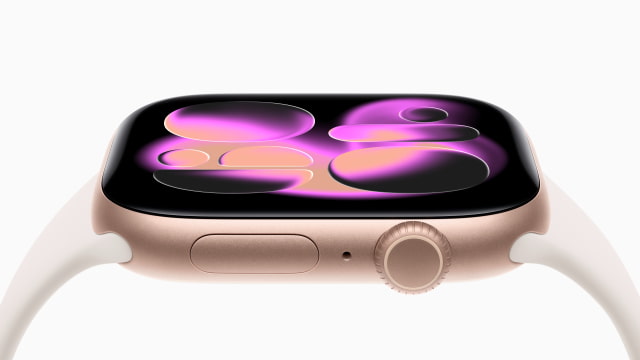
Apple is reportedly evaluating a new low-power OLED backplane technology that could eventually succeed LTPO in future devices. Supply chain sources indicate LG Display is currently developing and validating High-Mobility Oxide (HMO) TFT technology on its Gen-6 OLED production lines as part of that effort.
According to a report from The Elec, Apple is looking closely at HMO as a next-generation upgrade. The current LTPO technology allows Pro iPhones and the Apple Watch to dynamically adjust their refresh rates while preserving battery efficiency, but it comes with manufacturing hurdles.
Every OLED display relies on a backplane to act as the switches that turn individual pixels on and off. Today, Apple's LTPO panels combine the strengths of low-temperature polycrystalline silicon (LTPS) and oxide TFT technologies, but the fabrication process is relatively complex. Unlike LTPS and LTPO, oxide TFTs do not require processes such as laser crystallization and ion implantation. Skipping these steps could potentially reduce manufacturing costs while preserving the low-power advantages of oxide technology.
The main challenge is achieving the performance needed for high-resolution, high-refresh-rate OLED displays. Conventional oxide TFTs have historically struggled in these applications because of their relatively low electron mobility. Current mass-produced oxide TFTs typically offer a mobility rate below 10 cm²/Vs, while industry targets for next-generation applications range from 30 to 50 cm²/Vs. To reach those levels, LG Display is using a thin-film deposition method known as sputtering, which can be integrated into existing production lines and leverages the company's current manufacturing infrastructure.
Industry observers expect Apple Watch OLED panels could be the first commercial application of the technology, potentially as soon as next year. Apple has historically validated new backplane technologies with LG Display for smartwatch applications before moving them into additional product categories.
If the technology proves viable, Apple will likely expand development efforts to additional panel makers. Industry sources say Apple has traditionally brought both LG Display and Samsung Display into the fold as new display technologies move from the wrist to mobile devices. Samsung is already advancing its own oxide manufacturing capabilities, having recently achieved 90 percent yields on its advanced OLED production lines for future MacBooks.
Before HMO can reach mass production, LG Display must still demonstrate that the technology can meet performance targets while maintaining process temperature control, large-area uniformity, long-term reliability, and acceptable yields on its Gen-6 production lines. The final commercialization timeline remains uncertain and will depend heavily on customer schedules and the outcome of ongoing validation efforts.
Get the iClarified Daily Newsletter
Apple news, rumors, tutorials, price drop alerts, in your inbox every evening, free.
Unsubscribe at any time.
Success!
You have been subscribed.
Add Comment
Would you like to be notified when someone replies or adds a new comment?
Yes (All Threads)
Yes (This Thread Only)
No
Notifications
Would you like to be notified when we post a new Apple news article or tutorial?








![How To Change Wallpaper on Mac [Video]](/images/tutorials/90512/90512/90512-160.jpg "How To Change Wallpaper on Mac [Video]")
![How To Turn Off Always On Display on iPhone [Video]](/images/tutorials/87524/87524/87524-160.jpg "How To Turn Off Always On Display on iPhone [Video]")



![16-Inch M5 Max MacBook Pro Drops $900 to New Low of $3,499 [Deal]](/images/news/102438/102438/102438-160.jpg "16-Inch M5 Max MacBook Pro Drops $900 to New Low of $3,499 [Deal]")
![Magic Keyboard for iPad Air Drops to $200 on Amazon [Deal]](/images/news/102402/102402/102402-160.jpg "Magic Keyboard for iPad Air Drops to $200 on Amazon [Deal]")
