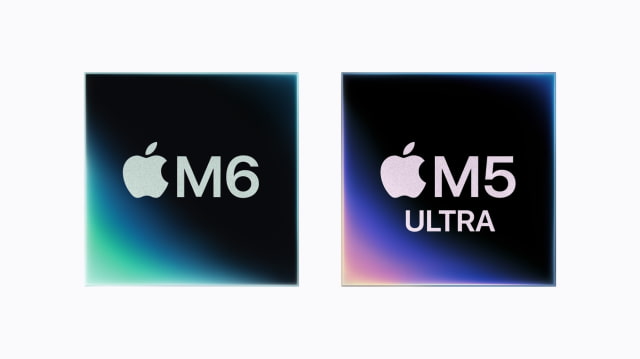
Apple has introduced the M6 and M5 Ultra, two new chips powering the latest Mac mini and Mac Studio. M6 is Apple's first chip manufactured using a 2-nanometer process, while M5 Ultra is the company's first M-series chip built with a quad-die architecture.
M6
M6 features a 12-core CPU with two super cores, four performance cores, and six efficiency cores. Apple says it delivers up to 1.2x faster multithreaded performance than M5 and up to 2.4x faster performance than M1.
The chip also includes a 12-core GPU with a Neural Accelerator in each core, updated Dynamic Caching, hardware-accelerated ray tracing, and 50% higher geometry rates. Apple claims nearly 30% more peak GPU compute for AI than M5 and more than eight times the performance of M1.
M6 introduces two 16-core Neural Engines that system frameworks can use simultaneously. Apple says the dual-engine design provides up to twice the peak compute of previous generations.
The chip supports up to 32GB of unified memory and delivers up to 170GB/s of memory bandwidth, a 10% increase over M5 and 2.5 times the bandwidth of M1.
M5 Ultra
M5 Ultra uses an updated UltraFusion interconnect to combine two dual-die M5 Max chips into a single quad-die system on a chip. The interconnect provides more than 4.4TB/s of inter-die bandwidth and over six times the connection density of the previous design.
The chip can be configured with up to a 36-core CPU consisting of 12 super cores and 24 performance cores. Apple claims up to 1.25x higher single-threaded performance and 1.3x higher multithreaded performance than M3 Ultra.
Its GPU scales to 80 cores and adds a Neural Accelerator to every GPU core. Apple says this provides up to 4.5 times the peak GPU compute for AI of M3 Ultra and more than six times that of M1 Ultra. Third-generation ray tracing, mesh shading, and second-generation Dynamic Caching contribute to claimed graphics performance gains of up to 40% over M3 Ultra.
M5 Ultra also includes a 32-core Neural Engine and an expanded Media Engine with hardware support for H.264, HEVC, ProRes encode and decode, and AV1 decoding.
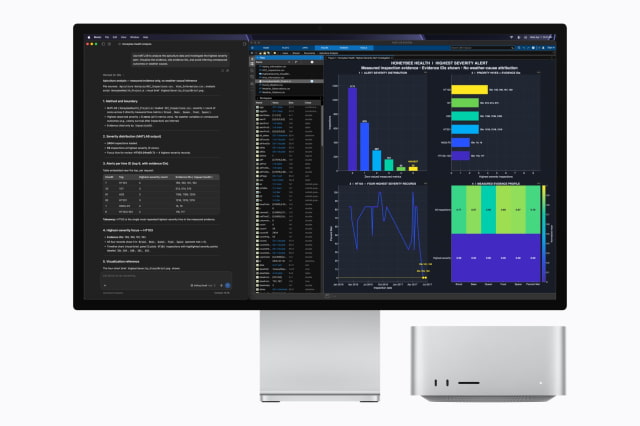
The chip supports up to 512GB of unified memory and 1.2TB/s of memory bandwidth, 50% more bandwidth than M3 Ultra. Apple says the capacity allows large datasets and AI models with hundreds of billions of parameters to run entirely on the device.
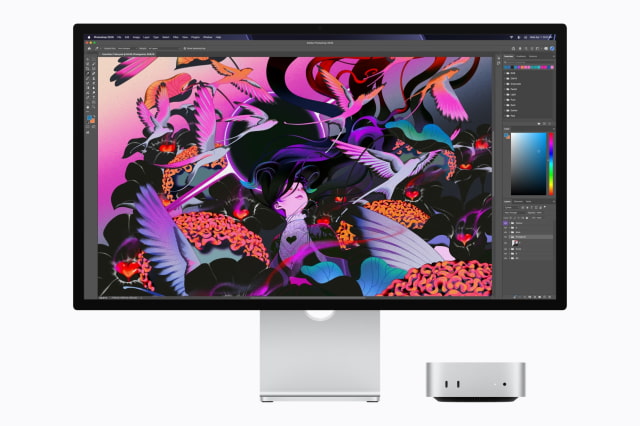
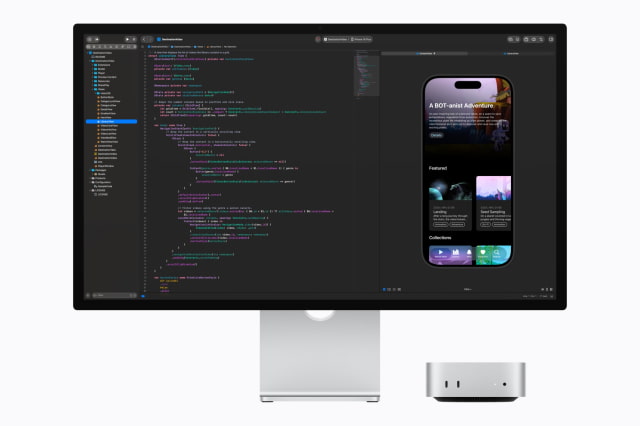
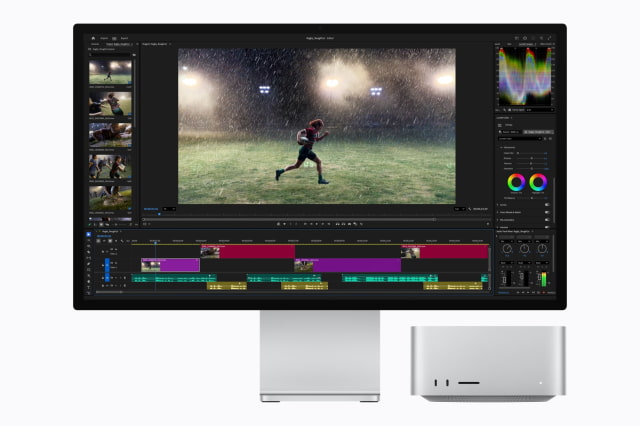
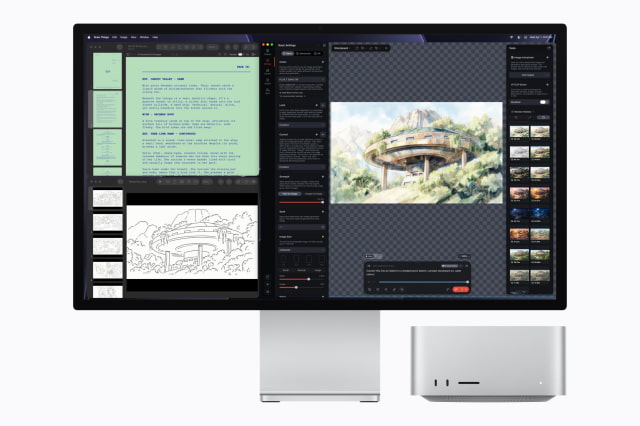
Apple's Core AI, Core ML, Metal, and Xcode tools can distribute workloads across the CPU, GPU, and Neural Engine on both chips. M6 debuts in the new Mac mini, while M5 Ultra is available in the new Mac Studio.
Get the iClarified Daily Newsletter
Apple news, rumors, tutorials, price drop alerts, in your inbox every evening, free.
Unsubscribe at any time.
Success!
You have been subscribed.
Add Comment
Would you like to be notified when someone replies or adds a new comment?
Yes (All Threads)
Yes (This Thread Only)
No
Notifications
Would you like to be notified when we post a new Apple news article or tutorial?



![Apple TV Shares 'Full Throttle' With F1 Drivers and Vince Young Ahead of U.S. Grand Prix [Video]](/images/news/103023/103023/103023-160.jpg "Apple TV Shares 'Full Throttle' With F1 Drivers and Vince Young Ahead of U.S. Grand Prix [Video]")
![MacBook Neo Helps Apple Gain PC Market Share Despite Shipment Decline [Report]](/images/news/103020/103020/103020-160.jpg "MacBook Neo Helps Apple Gain PC Market Share Despite Shipment Decline [Report]")
![iPhone Duo Teardowns Reveal Dual-Battery Design and Repair Challenges [Video]](/images/news/103014/103014/103014-160.jpg "iPhone Duo Teardowns Reveal Dual-Battery Design and Repair Challenges [Video]")



![How To Back Up Your iPhone to an External Drive on Mac [Video]](/images/tutorials/72786/72786/72786-160.jpg "How To Back Up Your iPhone to an External Drive on Mac [Video]")

![How To Find Your IP Address on iPhone [Video]](/images/tutorials/496/496/496-160.jpg "How To Find Your IP Address on iPhone [Video]")


![New Fire TV Stick 4K Drops to $29.99 (50% Off) [Deal]](/images/news/102984/102984/102984-160.jpg "New Fire TV Stick 4K Drops to $29.99 (50% Off) [Deal]")
![Apple's iPhone 18 Pro and Pro Max Cases Are Up to 37% Off [Deal]](/images/news/102978/102978/102978-160.jpg "Apple's iPhone 18 Pro and Pro Max Cases Are Up to 37% Off [Deal]")
![16-Inch MacBook Pro With M5 Pro Drops to $2,429 ($570 Off), Lowest Price We've Seen [Deal]](/images/news/102957/102957/102957-160.jpg "16-Inch MacBook Pro With M5 Pro Drops to $2,429 ($570 Off), Lowest Price We've Seen [Deal]")