Rivian CEO RJ Scaringe isn't backing down on his decision to block Apple CarPlay from his vehicles. In a candid interview this week, the executive described Apple's interface as merely a "life raft" for drivers stuck with bad automotive software, arguing that Rivian's native system offers a better, more unified experience.
Speaking to Stratechery, Scaringe explained that adopting CarPlay forces an automaker to hand over the user experience to Apple. He argues this creates an "abstraction layer" that effectively breaks the car's ecosystem. Instead of a seamless interface, drivers end up with two competing operating systems fighting for screen real estate—one for vehicle functions like climate or door status, and another for maps and media. Scaringe bluntly characterized this split-brain approach as "poor UI."
The decision is also strategic. Scaringe believes that controlling the full software stack is necessary to integrate upcoming AI features. Rivian wants users to be able to ask the vehicle directly about their schedule or range without the car needing to route that request through a third-party phone projection layer. He argues that building dependencies on Apple now would be "extremely risky" and difficult to reverse later.
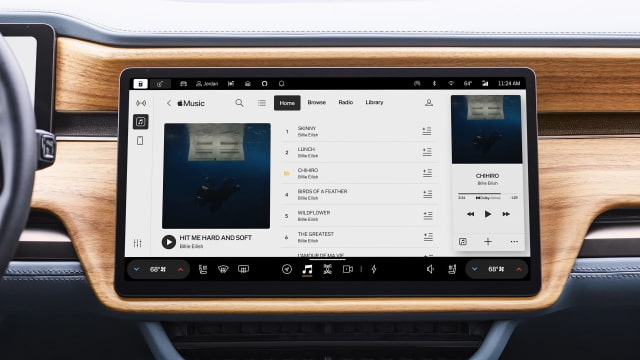
While the company refuses to mirror the iPhone interface, it has compromised on specific services. Rivian recently added native integration for Apple Music, allowing subscribers to access their playlists directly through the vehicle's infotainment system.
Rivian's stance places it alongside General Motors, which faced significant backlash after it confirmed it would drop CarPlay from future EVs to capture more subscription revenue. However, the position is becoming increasingly isolated. Toyota continues to expand CarPlay features, and recent reports suggest even Tesla—the original holdout—is working to add support to boost sales.



![iFixit Investigates iPhone Duo Screen Failures, Points to Possible Hinge Issue [Video]](/images/news/103038/103038/103038-160.jpg "iFixit Investigates iPhone Duo Screen Failures, Points to Possible Hinge Issue [Video]")
![Apple's Touchscreen MacBook Pro to Cost 'Significantly' More [Gurman]](/images/news/103035/103035/103035-160.jpg "Apple's Touchscreen MacBook Pro to Cost 'Significantly' More [Gurman]")
![Apple Stores Get iPhone Scanner to Fight Return Fraud [Report]](/images/news/103029/103029/103029-160.jpg "Apple Stores Get iPhone Scanner to Fight Return Fraud [Report]")
![Apple TV Shares 'Full Throttle' With F1 Drivers and Vince Young Ahead of U.S. Grand Prix [Video]](/images/news/103023/103023/103023-160.jpg "Apple TV Shares 'Full Throttle' With F1 Drivers and Vince Young Ahead of U.S. Grand Prix [Video]")
![How To Turn Off iPhone [Video]](/images/tutorials/94999/94999/94999-160.jpg "How To Turn Off iPhone [Video]")
![How To Back Up Your iPhone to an External Drive on Mac [Video]](/images/tutorials/72786/72786/72786-160.jpg "How To Back Up Your iPhone to an External Drive on Mac [Video]")

![How To Find Your IP Address on iPhone [Video]](/images/tutorials/496/496/496-160.jpg "How To Find Your IP Address on iPhone [Video]")

![Beats Headphones, Earbuds, and Pill Speaker Are Up to 41% Off [Deal]](/images/news/103026/103026/103026-160.jpg "Beats Headphones, Earbuds, and Pill Speaker Are Up to 41% Off [Deal]")
![New Fire TV Stick 4K Drops to $29.99 (50% Off) [Deal]](/images/news/102984/102984/102984-160.jpg "New Fire TV Stick 4K Drops to $29.99 (50% Off) [Deal]")
![Apple's iPhone 18 Pro and Pro Max Cases Are Up to 37% Off [Deal]](/images/news/102978/102978/102978-160.jpg "Apple's iPhone 18 Pro and Pro Max Cases Are Up to 37% Off [Deal]")
![16-Inch MacBook Pro With M5 Pro Drops to $2,429 ($570 Off), Lowest Price We've Seen [Deal]](/images/news/102957/102957/102957-160.jpg "16-Inch MacBook Pro With M5 Pro Drops to $2,429 ($570 Off), Lowest Price We've Seen [Deal]")
