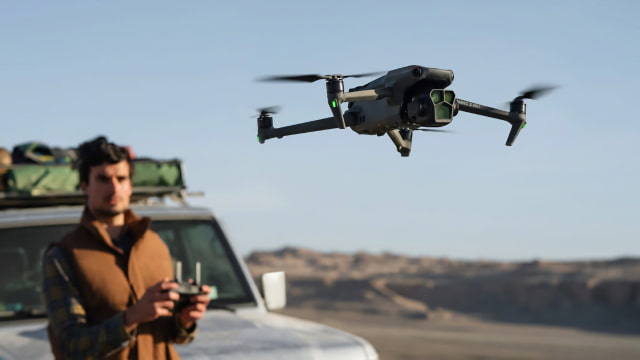
The Federal Communications Commission has officially updated its Covered List to include unmanned aircraft systems (UAS) and critical components produced in foreign countries, a move that effectively bans companies like DJI from authorizing new drones for the U.S. market.
The decision comes after a White House-led interagency body determined that foreign-made UAS pose "unacceptable risks" to national security and the safety of U.S. persons. The FCC notes that relying on these devices threatens homeland security and undermines the domestic industrial base. The action supports the administration's recent executive orders aimed at restoring American airspace sovereignty and boosting U.S. drone dominance.
Under the Secure and Trusted Communications Networks Act, equipment placed on the Covered List is prohibited from receiving FCC equipment authorization. Since wireless devices generally require this certification to be imported or sold in the United States, the ruling effectively blocks new models from entering the country. While the order applies broadly to foreign-made UAS, major Chinese manufacturers like DJI and Autel Robotics have long been the primary targets of Washington's security concerns regarding data privacy.
Crucially, the FCC clarified that today's action applies only to new device models on a going-forward basis. It does not prohibit the use of drones that have already been purchased, nor does it prevent retailers from selling existing inventory that received FCC authorization prior to this update.
This shakeup hits hard in the consumer space, where DJI is practically the default choice. It's a brand many Apple users rely on, especially with recent releases like the Osmo Mobile 8 that tap directly into iPhone features via DockKit. While the FCC action is limited to drones and related components, the government's heightened scrutiny of foreign communication technology raises broader questions about how DJI's wider product lineup could be viewed in the future.
DJI said it was disappointed by the FCC's decision, arguing that concerns about its data security are not based on evidence. The company maintains that its products are secure and emphasized that operators can fly their drones without an internet connection, keeping images and flight logs stored locally.
FCC Chairman Brendan Carr welcomed the move, stating the agency will work with U.S. manufacturers to "unleash American drone dominance" now that the national security risk has been formally addressed.











![Apple Studio Display XDR Hits All-Time Low of $2,969.99 ($329 Off) [Deal]](/images/news/101976/101976/101976-160.jpg "Apple Studio Display XDR Hits All-Time Low of $2,969.99 ($329 Off) [Deal]")
![Apple AirPods Pro 3 Drop to $199 ($50 Off) [Deal]](/images/news/101966/101966/101966-160.jpg "Apple AirPods Pro 3 Drop to $199 ($50 Off) [Deal]")
