

Apple Watch Series 12 vs. SE 3: Which Features Are Worth Paying For?
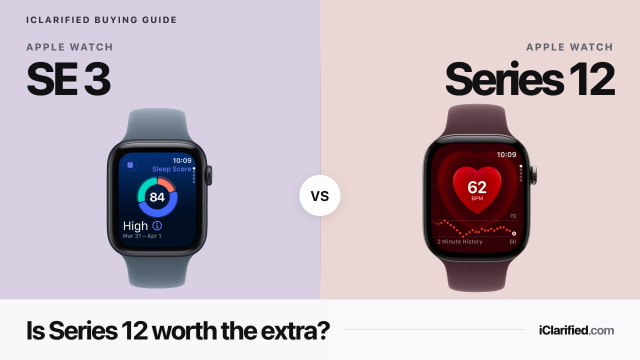
Apple Watch SE 3 already includes several features that once made the standard Series model an easy upsell: an Always-On display, fast charging, wrist temperature sensing, and sleep apnea notifications. At $249, it starts $150 below the $399 Series 12.
The screen is one of the clearest reasons to spend more on Series 12: it has roughly 22–28 percent more display area than the corresponding SE 3 size. Series 12 also adds a brighter display, the new Health Sensing System, additional heart-health capabilities, longer battery ratings, and more case options. The right choice depends on which of those you'll actually use.
What SE 3 Already Covers
SE 3 handles the core Apple Watch routine: activity rings, workouts, notifications, sleep stages, sleep score, high and low heart-rate notifications, and safety features including Fall Detection and Crash Detection. It also has wrist temperature sensing and supports sleep apnea notifications for eligible users.
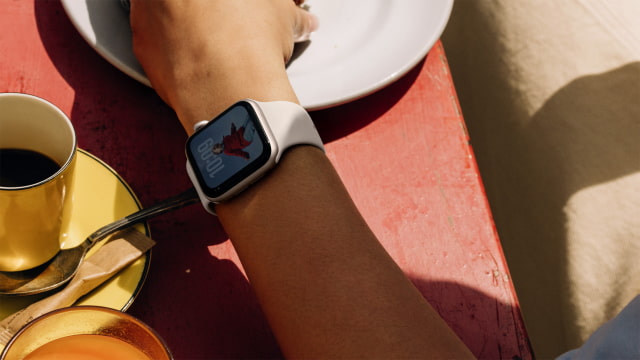
Its S10 chip powers an Always-On display, and it supports the same single tap, double tap, and wrist flick gestures listed for Series 12. Cellular versions offer 5G RedCap and LTE. You can choose SE 3 without giving up an always-visible clock or fast charging.
For a first Apple Watch, an everyday fitness companion, or a lower-cost replacement, that makes SE 3 a useful starting point. Series 12 is worth considering when you want more detailed health information or prefer its larger screen and case designs.

Series 12 Has More Screen in a Thinner Case
Series 12 gives you substantially more screen at either size. The 42mm model has 970 square millimeters of display area, compared with 759 on the 40mm SE 3—about 28 percent more. At the larger sizes, the 46mm Series 12 has 1,196 square millimeters versus 977 on the 44mm SE 3, an increase of about 22 percent. That extra room matters for reading messages, checking workout metrics, and tapping onscreen controls.
The smaller Series 12 is also worth a look if you want a roomy screen without moving up to a larger watch. Its 970-square-millimeter display is almost the same size as the 44mm SE 3's 977-square-millimeter display, in a shorter, thinner case.
SE 3 comes in 40mm and 44mm aluminum cases with Midnight or Starlight finishes. Series 12 offers 42mm and 46mm aluminum or titanium cases, plus ceramic models with actual heights of 43mm and 47mm.
Series 12 aluminum and titanium cases are 9.7mm thick, compared with 10.7mm for SE 3. The SE remains lighter, however: a 40mm GPS case weighs 26.3 grams, compared with 32.2 grams for the smaller aluminum GPS Series 12.
Series 12's wide-angle OLED display reaches 2,000 nits of peak brightness versus 1,000 nits on SE 3, giving it more headroom outdoors. It can also dim to one nit rather than two. Both have Always-On displays; Series 12 adds more screen space and a wider brightness range.
Aluminum Series 12 uses Ceramic Shield 2 over the display, while SE 3 uses Ion-X glass. Titanium and ceramic Series 12 models use sapphire front crystals. These premium Series 12 materials cost more than the $399 entry configuration.
What Series 12 Adds for Health Tracking
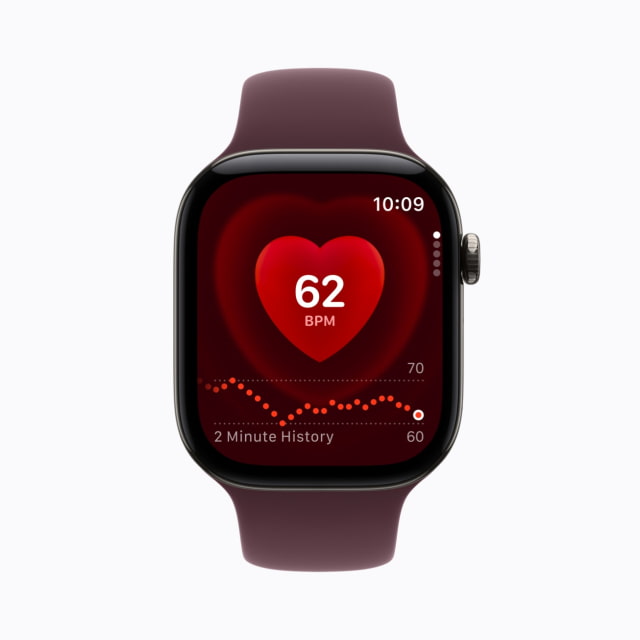
Series 12 has Apple's new Health Sensing System and S11 chip. Its always-on optical sensor takes a heart-rate measurement every five seconds throughout the day, and Apple says HRV measurements are recorded up to 24 times more often. SE 3 uses a second-generation optical heart sensor and the S10 chip.
Series 12 supports ECG, Blood Oxygen, and hypertension notifications; SE 3 does not offer those features. On U.S. Series 12 models, Blood Oxygen measurements are calculated and viewed in the paired iPhone's Health app. Availability, eligibility, and software requirements apply, and these tools aren't substitutes for medical care. Both watches support sleep apnea notifications and temperature-based cycle-tracking features for eligible users.
Series 12 also offers Readiness, which combines activity, training load, vitals, and sleep score into a 0–10 score for the day. If you want more detailed heart and recovery information, this is where the standard Series model adds the most substance.
Battery Life and Short Charging Breaks
Apple rates SE 3 for up to 18 hours of normal use and 32 hours in Low Power Mode. Series 12 is rated for up to 24 and 38 hours, respectively. The extra margin can help if you want to track sleep as well as daytime activity.
Both support fast charging, but Series 12 is quicker to reach 80 percent: about 30 minutes, compared with about 45 minutes for SE 3. A 15-minute top-up is rated for up to 12 hours of normal use on Series 12 or eight hours on SE 3.
For sleep tracking, Series 12 is rated for up to 10 hours from a five-minute charge. SE 3's rating is up to eight hours from eight minutes. Battery life and charging times vary with use, settings, and conditions; these are Apple's published ratings.
Swimming, Connectivity, and Intelligence Features
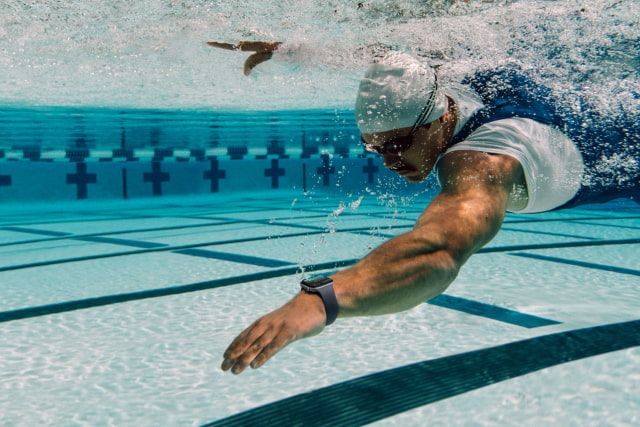
Both have a 50-meter water-resistance rating and support pool and open-water swim workouts. Series 12 adds a depth gauge to six meters, water-temperature sensing, and an IP6X dust-resistance rating. SE 3 does not list a depth gauge or IP6X rating.
Both use L1 GPS and Bluetooth 5.3. Series 12 supports 2.4GHz and 5GHz Wi-Fi, while SE 3 supports 2.4GHz Wi-Fi. Series 12 also has a second-generation Ultra Wideband chip. On either watch, cellular connectivity is an optional configuration choice in aluminum and requires a compatible service plan to use.
Both can access Siri AI with the required paired iPhone, software, language, and regional support. Series 12 separately supports S11-based Audio Intelligence, including Live Rewind and Siri Recap. Those two features are planned for a late-2026 beta, initially in English and outside the EU, and require an Apple Intelligence-enabled iPhone 16 or later, excluding iPhone 16e.
For standard pairing, both require an iPhone 11 or later, including iPhone SE (second generation or later), running iOS 27 or later.
SE 3 vs. Series 12 Specifications
| Feature | Apple Watch SE 3 | Apple Watch Series 12 |
|---|---|---|
| U.S. starting retail price | $249 | $399 |
| Case sizes / materials | 40/44mm aluminum | 42/46mm aluminum or titanium; 43/47mm ceramic |
| Chip | S10 | S11 |
| Heart sensors | Second-generation optical; temperature sensor | Always-on optical; second-generation electrical |
| ECG | No | Yes; eligibility varies |
| Sleep apnea notifications | Yes; eligibility varies | Yes; eligibility varies |
| Blood Oxygen | No | Yes; U.S. results on paired iPhone |
| Hypertension notifications | No | Yes; eligibility varies |
| Normal-use battery rating | Up to 18 hours | Up to 24 hours |
| Low Power Mode battery rating | Up to 32 hours | Up to 38 hours |
| Charge from 0–80% | About 45 minutes | About 30 minutes |
| 15-minute charge | Up to 8 hours of normal use | Up to 12 hours of normal use |
| Sleep-tracking top-up | 8 minutes for up to 8 hours of sleep tracking | 5 minutes for up to 10 hours of sleep tracking |
| Display technology | Always-On Retina; OLED; LTPO | Always-On Retina; wide-angle OLED; LTPO3 |
| Display resolution | 40mm: 324 × 394; 44mm: 368 × 448 pixels | 42/43mm: 374 × 446; 46/47mm: 416 × 496 pixels |
| Display area | 40mm: 759 mm²; 44mm: 977 mm² | 42/43mm: 970 mm²; 46/47mm: 1,196 mm² |
| Peak brightness | Up to 1000 nits | Up to 2000 nits |
| Display cover | Ion-X | Ceramic Shield 2 (aluminum); sapphire (titanium or ceramic) |
| Case dimensions (H × W × D; smaller / larger) | 40mm: 40 × 34 × 10.7 mm; 44mm: 44 × 38 × 10.7 mm | 42mm: 42 × 37 × 9.7 mm; 46mm: 46 × 40 × 9.7 mm |
| Aluminum GPS weight | 40mm: 26.3 g; 44mm: 32.9 g | 42mm: 32.2 g; 46mm: 39.5 g |
| Aluminum cellular weight | 40mm: 26.4 g; 44mm: 33.0 g | 42mm: 31.5 g; 46mm: 38.6 g |
| Titanium weight | No titanium version | 42mm: 36.5 g; 46mm: 44.9 g |
| Ceramic weight | No ceramic version | 43mm: 41.7 g white / 42.8 g blue; 47mm: 51.3 g white / 52.9 g blue |
| Ceramic dimensions (H × W × D) | No ceramic version | 43mm: 43 × 37 × 9.85 mm; 47mm: 47 × 41 × 9.85 mm |
| Storage | 64GB | 64GB |
| GPS | L1 GPS | L1 GPS |
| Cellular support | 5G RedCap and LTE on cellular models | 5G RedCap and LTE on cellular models |
| Wi-Fi / Bluetooth | Wi-Fi 4 (2.4GHz); Bluetooth 5.3 | Wi-Fi 4 (2.4/5GHz); Bluetooth 5.3 |
| Dust resistance | No IP6X rating listed | IP6X |
| Water resistance / depth sensing | 50m water resistance; no depth gauge | 50m water resistance; depth gauge to 6m |
| Paired iPhone | iPhone 11 or SE (2nd gen)+; iOS 27+ | iPhone 11 or later / SE (2nd gen or later); iOS 27+ |
Is Series 12 Worth the Extra $150?
Choose SE 3 if your priorities are notifications, workouts, activity rings, sleep tracking, and keeping the price down. It already has an Always-On display and fast charging. The 40mm SE 3 is also the smallest and lightest option in this comparison.
Choose Series 12 if you want more room for messages and workout data, a brighter screen outdoors, ECG and the expanded health capabilities, or longer battery ratings with faster top-ups. The display alone can be a good reason to spend more, especially if you find a smaller watch's screen cramped. You don't have to want every extra health feature for Series 12 to make sense.
The $150 difference compares the base U.S. GPS configurations. Larger cases, cellular hardware, materials, and bands change the final prices. Compare the SE 3 and Series 12 listings, then use the iClarified Apple Watch Price Tracker for current pricing and availability across configurations and tracked retailers.

![Apple Cuts Fitness+ Jobs as It Rethinks the Service [Report]](/images/news/102306/102306/102306-160.jpg "Apple Cuts Fitness+ Jobs as It Rethinks the Service [Report]")
![Pro Photographer Austin Mann Tests iPhone 18 Pro Camera [Video]](/images/news/102297/102297/102297-160.jpg "Pro Photographer Austin Mann Tests iPhone 18 Pro Camera [Video]")
![Apple Releases Xcode 27.1 Beta With iPhone Duo SDKs and Simulator [Download]](/images/news/102276/102276/102276-160.jpg "Apple Releases Xcode 27.1 Beta With iPhone Duo SDKs and Simulator [Download]")





![Apple Studio Display XDR Hits All-Time Low of $2,969.99 ($329 Off) [Deal]](/images/news/101976/101976/101976-160.jpg "Apple Studio Display XDR Hits All-Time Low of $2,969.99 ($329 Off) [Deal]")
