Apple is turning to advanced metallurgy to solve the weight problem on its first foldable iPhone. New supply chain details suggest the company will use upgraded titanium and liquid metal alloys to keep the device durable without making it too heavy to hold.
According to a post from leaker yeux1122 on Naver, suppliers are preparing specific alloys for the project. The hinge mechanism will reportedly be built using liquid metal—specifically, an improved version of the material currently used in iPhone SIM trays. This choice is likely aimed at ensuring the moving parts remain durable over thousands of folds while keeping the internal footprint small.
The chassis itself is expected to stick with titanium, but with a twist. The leaker claims Apple is adopting an "improved version" of the alloy found on current Pro models. By tweaking the composition and processing, the company has apparently boosted the material's strength while reducing its weight per unit area. This is a critical fix for a foldable, which naturally carries more mass due to the dual-screen configuration and complex hinge assembly.
Shaving off grams fits with earlier reports describing the project as a "super thin" design achievement. Apple has a difficult balancing act here. It needs a slim profile but also needs to fit a battery large enough to power two screens. Recent rumors suggest the company is even testing a massive 5,800mAh battery, so cutting weight in the frame makes sense. The liquid metal detail also backs up older whispers about a durable metallic glass hinge.
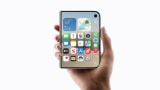
Aside from the metal work, Apple is focused on the display experience. The company is reportedly working on a visually crease-free screen using new glass tech to avoid the seam seen on other foldables. Other specs floating around include a boxier 4:3 aspect ratio and side-mounted Touch ID to keep the bezels thin.
The foldable iPhone is currently expected to land in late 2026, part of a major hardware roadmap refresh.

![Apple's Foldable iPhone to Use Improved Titanium and Liquid Metal Hinge to Cut Weight [Rumor]](/images/news/99632/472570/472570-64.png "Apple's Foldable iPhone to Use Improved Titanium and Liquid Metal Hinge to Cut Weight [Rumor]")
![Apple's Foldable iPhone to Use Improved Titanium and Liquid Metal Hinge to Cut Weight [Rumor]](/images/news/99632/472572/472572-640.jpg "Apple's Foldable iPhone to Use Improved Titanium and Liquid Metal Hinge to Cut Weight [Rumor]")

![Apple Stores Get iPhone Scanner to Fight Return Fraud [Report]](/images/news/103029/103029/103029-160.jpg "Apple Stores Get iPhone Scanner to Fight Return Fraud [Report]")
![Apple TV Shares 'Full Throttle' With F1 Drivers and Vince Young Ahead of U.S. Grand Prix [Video]](/images/news/103023/103023/103023-160.jpg "Apple TV Shares 'Full Throttle' With F1 Drivers and Vince Young Ahead of U.S. Grand Prix [Video]")
![MacBook Neo Helps Apple Gain PC Market Share Despite Shipment Decline [Report]](/images/news/103020/103020/103020-160.jpg "MacBook Neo Helps Apple Gain PC Market Share Despite Shipment Decline [Report]")
![iPhone Duo Teardowns Reveal Dual-Battery Design and Repair Challenges [Video]](/images/news/103014/103014/103014-160.jpg "iPhone Duo Teardowns Reveal Dual-Battery Design and Repair Challenges [Video]")

![How To Back Up Your iPhone to an External Drive on Mac [Video]](/images/tutorials/72786/72786/72786-160.jpg "How To Back Up Your iPhone to an External Drive on Mac [Video]")

![How To Find Your IP Address on iPhone [Video]](/images/tutorials/496/496/496-160.jpg "How To Find Your IP Address on iPhone [Video]")

![Beats Headphones, Earbuds, and Pill Speaker Are Up to 41% Off [Deal]](/images/news/103026/103026/103026-160.jpg "Beats Headphones, Earbuds, and Pill Speaker Are Up to 41% Off [Deal]")

![New Fire TV Stick 4K Drops to $29.99 (50% Off) [Deal]](/images/news/102984/102984/102984-160.jpg "New Fire TV Stick 4K Drops to $29.99 (50% Off) [Deal]")
![Apple's iPhone 18 Pro and Pro Max Cases Are Up to 37% Off [Deal]](/images/news/102978/102978/102978-160.jpg "Apple's iPhone 18 Pro and Pro Max Cases Are Up to 37% Off [Deal]")
![16-Inch MacBook Pro With M5 Pro Drops to $2,429 ($570 Off), Lowest Price We've Seen [Deal]](/images/news/102957/102957/102957-160.jpg "16-Inch MacBook Pro With M5 Pro Drops to $2,429 ($570 Off), Lowest Price We've Seen [Deal]")
