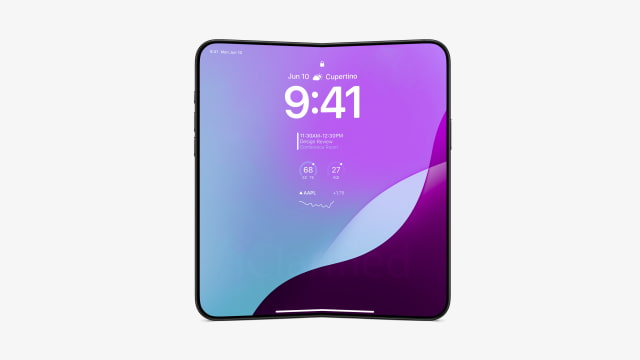
Apple's first foldable iPhone might finally tackle the screen crease problem by physically separating the display from the hinge. A fresh supply chain leak points to a dual-layer glass structure that keeps the OLED panel isolated from the folding mechanism.
The hardware details come from frequent leaker Digital Chat Station on Weibo. According to the post, Apple is developing an ultra-thin or ultra-flexible glass sandwich design. Instead of sitting directly against the hinge, where stress is highest, the display layer is positioned in the middle. That separation could help reduce long-term wear and keep the crease less noticeable. The prototype is also said to feature self-healing glass and a "traceless" hinge.
This dual-layer setup also lines up with earlier supply chain leaks. We previously reported that Apple is targeting a crease of less than 0.15 millimeters. Adding a buffer between the hinge and display would make that goal more achievable. It also fits with reports of a liquid metal hinge designed to reduce weight without sacrificing strength.
Getting a foldable display to hold up without developing a visible groove has been a major challenge. When it arrives, Apple's device is expected to feature a 7.8-inch internal display with a modified, iPad-style interface for multitasking. The outer display is rumored to come in under 5.3 inches.
To make room for a larger battery and keep the device thin, Apple may skip internal Face ID components. Instead, Touch ID is expected to return via a side-mounted sensor built into the power button.
The foldable is currently rumored to launch in late 2026 alongside the iPhone 18 Pro. With more complex components and materials, it is expected to be the most expensive iPhone Apple has released.



![Apple Highlights Child Safety and Screen Time Controls in New Ad [Video]](/images/news/102393/102393/102393-160.jpg "Apple Highlights Child Safety and Screen Time Controls in New Ad [Video]")









![Magic Keyboard for iPad Air Drops to $200 on Amazon [Deal]](/images/news/102402/102402/102402-160.jpg "Magic Keyboard for iPad Air Drops to $200 on Amazon [Deal]")
![13-Inch M5 MacBook Air With 1TB Drops to $1,449 on Amazon [Deal]](/images/news/102345/102345/102345-160.jpg "13-Inch M5 MacBook Air With 1TB Drops to $1,449 on Amazon [Deal]")