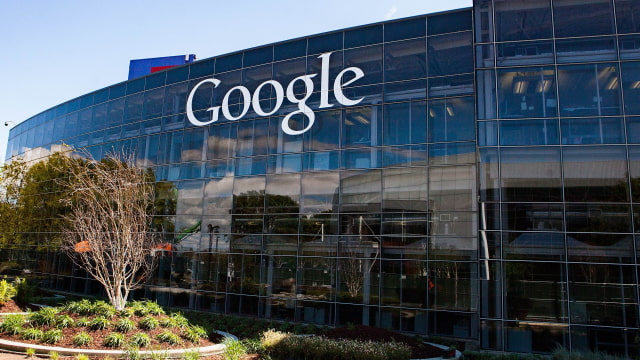
Google has formally appealed a federal court ruling that designated the company an illegal search monopolist, arguing the original decision punishes lawful competition and misinterprets its multibillion-dollar default search agreements. In a brief filed with the United States Court of Appeals for the District of Columbia Circuit, Google is seeking to overturn both the August 2024 liability ruling and a September 2025 remedies order requiring it to share certain search data and syndicate search results with rivals.
The appeal pushes back aggressively against claims that Google's distribution contracts harmed competition. A central focus is the Internet Services Agreement between Google and Apple, which set Google as the default search engine in Safari across the iPhone, iPad, and Mac. According to the filing, the arrangement reflected competition on the merits, with Apple choosing Google because it offered the best search experience and highest revenue potential.
Drawing heavily from trial testimony, the brief notes that Apple executives described selecting Google as a "no brainer" because it had "the best search engine." It also highlights Apple's criticism of Microsoft's Bing, which executives characterized as inferior and poor at monetizing advertising. Google maintains that it never prevented Apple from promoting rival search engines and says Apple independently designed Safari around a single default search engine to provide a consistent experience across devices.
The company also challenges the legal framework used by Judge Amit P. Mehta to determine antitrust liability. In the filing, Google says the district court applied the wrong standard for evaluating exclusionary conduct, effectively penalizing the company because its product and pricing made it difficult for rivals to compete. Browser makers, it argues, remained free to distribute and promote competing search engines, while Safari users could manually switch defaults or access rivals through bookmarks and direct navigation.
Another major dispute centers on market definition. Google contends the ruling improperly excluded specialized search platforms such as Amazon and Expedia from the competitive landscape. The filing states those services directly compete with Google for valuable commercial queries involving shopping, travel, and other monetizable searches.
Google also takes aim at the remedies imposed by the district court. The order requires the company to provide certain competitors with access to search data, portions of its search index, and syndicated search results. The brief describes those measures as an improper transfer of infrastructure and investments built over decades, while specifically objecting to extending the remedies to generative AI firms.
The Department of Justice and a coalition of states are simultaneously pursuing a cross-appeal, arguing the original remedies did not go far enough. The government continues to seek broader structural changes, including the potential divestiture of Chrome.
Get the iClarified Daily Newsletter
Apple news, rumors, tutorials, price drop alerts, in your inbox every evening, free.
Unsubscribe at any time.
Success!
You have been subscribed.
Add Comment
Would you like to be notified when someone replies or adds a new comment?
Yes (All Threads)
Yes (This Thread Only)
No
Notifications
Would you like to be notified when we post a new Apple news article or tutorial?






![Apple Debuts 'Nocturne' Trailer Ahead of October 30 Premiere [Video]](/images/news/102471/102471/102471-160.jpg "Apple Debuts 'Nocturne' Trailer Ahead of October 30 Premiere [Video]")



![How To Find Your iPhone IMEI Number [Video]](/images/tutorials/83557/83557/83557-160.jpg "How To Find Your iPhone IMEI Number [Video]")


![16-Inch M5 Max MacBook Pro Drops $900 to New Low of $3,499 [Deal]](/images/news/102438/102438/102438-160.jpg "16-Inch M5 Max MacBook Pro Drops $900 to New Low of $3,499 [Deal]")
![Magic Keyboard for iPad Air Drops to $200 on Amazon [Deal]](/images/news/102402/102402/102402-160.jpg "Magic Keyboard for iPad Air Drops to $200 on Amazon [Deal]")
![13-Inch M5 MacBook Air With 1TB Drops to $1,449 on Amazon [Deal]](/images/news/102345/102345/102345-160.jpg "13-Inch M5 MacBook Air With 1TB Drops to $1,449 on Amazon [Deal]")