

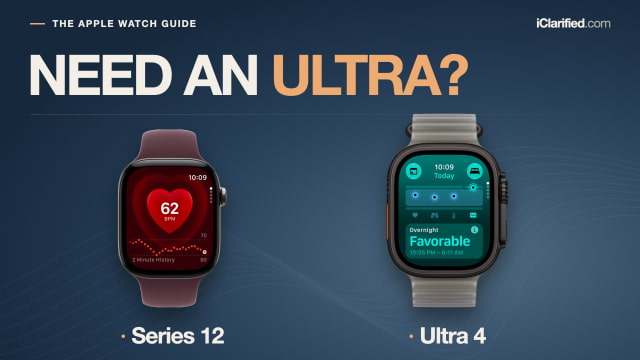
Apple Watch Series 12 and Ultra 4 share the biggest health upgrade in this year's lineup. Both have the S11 chip, Apple's new Health Sensing System, and Readiness. You can get those features in the $399 Series 12 without spending $799 on an Ultra.
The Ultra premium buys a different kind of watch: longer battery life, a larger, brighter display, a 49mm titanium case, dual-frequency GPS, and built-in satellite communication. For most people, the choice comes down to whether those advantages are worth the extra money and bulk.
Series 12 Is the Easier Everyday Fit
Series 12 comes in 42mm and 46mm aluminum or titanium cases, plus ceramic versions measuring 43mm and 47mm. Ultra 4 has a single 49mm titanium case. It is also thicker at 12mm, compared with 9.7mm for aluminum and titanium Series 12 and 9.85mm for ceramic.
Weight is a noticeable part of that difference. A 42mm aluminum GPS Series 12 weighs 32.2 grams without its band, while the natural-titanium Ultra 4 weighs 63 grams. A larger Series 12 or a premium case material narrows the gap, but Ultra remains the heavier option.
For smaller wrists, sleeping with the watch, or wearing it beneath fitted sleeves, Series 12 deserves a close look. Ultra 4 makes more sense if you like a substantial sports watch and want its additional hardware. Band choice will also affect the fit and total weight.

Ultra 4 Buys More Time Away From a Charger
Apple rates Series 12 for up to 24 hours of normal use and 38 hours in Low Power Mode. Ultra 4 is rated for up to 50 and 84 hours, respectively. The extra charging flexibility is useful well beyond endurance sports: it can make overnight tracking, travel, and a missed charging session easier to accommodate.
Series 12 reaches 80 percent in about 30 minutes, compared with about 45 minutes for Ultra 4. A 15-minute charge adds up to 12 hours of normal use on Series 12 or 18 hours on Ultra 4. Both are rated for up to 10 hours of sleep tracking from a five-minute charge.
Cellular use, workouts, settings, and conditions affect how closely either watch matches Apple's battery and charging ratings.
The Display and Controls Favor Different Uses
Both watches have Always-On Retina displays with wide-angle OLED and LTPO3 technology. Ultra 4 reaches 3,000 nits of peak brightness, compared with 2,000 nits for Series 12, and supports Night Mode on its Ultra watch faces.
Ultra 4 also gives you the most screen space: 1,245 square millimeters, compared with 1,196 on the larger Series 12 and 970 on the smaller model. That's about 4 percent more than the 46mm Series 12, or 28 percent more than the 42mm version. The extra room is a benefit for maps, messages, and workout data, though the larger Series 12 comes close.
Ultra 4 also has a customizable Action button, dual speakers, a three-microphone array, and a siren. The Action button gives you a dedicated physical control for supported functions such as starting a workout. Series 12 uses the Digital Crown and side button without that additional control.
Series 12 aluminum models use Ceramic Shield 2 over the display. Titanium and ceramic Series 12 models have sapphire front crystals, as does Ultra 4.
You Get the New Health System on Either Watch
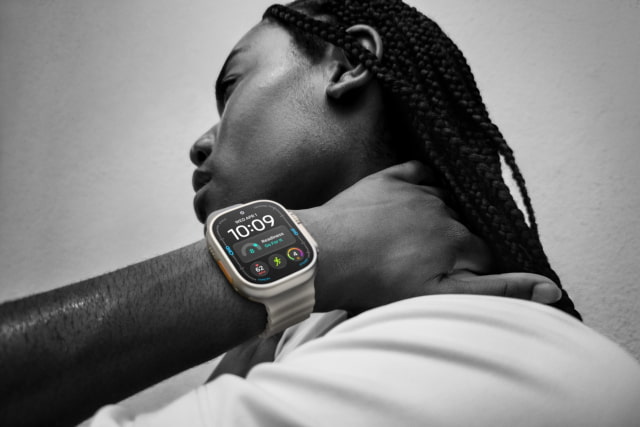
The new optical sensor measures heart rate every five seconds throughout the day, and Apple says the Health Sensing System records HRV up to 24 times more often. Series 12 and Ultra 4 both use those measurements for features including Recovery HRV and Readiness.
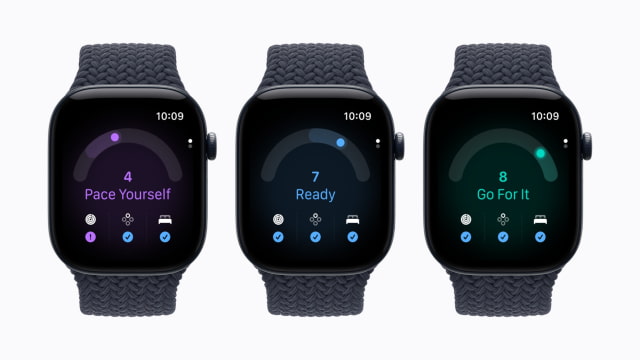
Readiness combines recent activity, training load, vitals, and sleep score into a 0–10 score that updates during the day. Both watches also offer ECG, sleep apnea notifications, and hypertension notifications, subject to eligibility and regional requirements. These core health features work the same way on either watch.
Both S11 watches support Apple's new Audio Intelligence capabilities. Live Rewind shows a short text snippet of what was just said, while Siri Recap summarizes conversations. Those two features are due in beta in late 2026, initially in English and outside the EU, and require an Apple Intelligence-enabled iPhone 16 or later, excluding iPhone 16e.
When Ultra's Outdoor Features Are Worth It
Ultra 4 has precision dual-frequency GPS, while Series 12 uses L1 GPS. Ultra also has built-in Emergency SOS, Messages, and Find My via satellite. Satellite service has location and connection requirements, and Messages and Find My require a carrier plan; an active cellular subscription is a separate consideration from the purchase price.
For swimming and shallow-water snorkeling, Series 12 offers 50-meter water resistance and a depth gauge to six meters. Ultra 4 has a 100-meter water-resistance rating and supports recreational scuba diving to 40 meters with a compatible app.
Outdoor workout battery ratings are up to 10 hours on Series 12 and 18 hours on Ultra 4. Ultra's Extended Workout mode raises its rating to 25 hours, while Max Extended Workout reaches 45 hours with reduced functionality. The latter modes use Low Power Mode, and Max Extended also turns off alerts and splits. For long events, those trade-offs are worth considering alongside the headline runtime.

Series 12 vs. Ultra 4 Specifications
| Feature | Apple Watch Series 12 | Apple Watch Ultra 4 |
|---|---|---|
| U.S. starting retail price | $399 | $799 |
| Case sizes / materials | 42/46mm aluminum or titanium; 43/47mm ceramic | 49mm titanium |
| Chip | S11 | S11 |
| Heart sensors | Always-on optical; second-generation electrical | Always-on optical; second-generation electrical |
| ECG | Yes; eligibility varies | Yes; eligibility varies |
| Sleep apnea notifications | Yes; eligibility varies | Yes; eligibility varies |
| Blood Oxygen | Yes; U.S. results on paired iPhone | Yes; U.S. results on paired iPhone |
| Hypertension notifications | Yes; eligibility varies | Yes; eligibility varies |
| Normal-use battery rating | Up to 24 hours | Up to 50 hours |
| Low Power Mode battery rating | Up to 38 hours | Up to 84 hours |
| Outdoor workout battery rating | Up to 10 hours | Up to 18 hours; 25 Extended / 45 Max Extended |
| Charge from 0–80% | About 30 minutes | About 45 minutes |
| 15-minute charge | Up to 12 hours of normal use | Up to 18 hours of normal use |
| Sleep-tracking top-up | 5 minutes for up to 10 hours of sleep tracking | 5 minutes for up to 10 hours of sleep tracking |
| Display technology | Always-On Retina; wide-angle OLED; LTPO3 | Always-On Retina; wide-angle OLED; LTPO3 |
| Display resolution | 42/43mm: 374 × 446; 46/47mm: 416 × 496 pixels | 422 × 514 pixels |
| Display area | 42/43mm: 970 mm²; 46/47mm: 1,196 mm² | 1,245 mm² |
| Peak brightness | Up to 2000 nits | Up to 3000 nits |
| Display cover | Ceramic Shield 2 (aluminum); sapphire (titanium or ceramic) | Flat sapphire crystal |
| Case dimensions (H × W × D; smaller / larger) | 42mm: 42 × 37 × 9.7 mm; 46mm: 46 × 40 × 9.7 mm | 49 × 44 × 12 mm |
| Ceramic dimensions (H × W × D) | 43mm: 43 × 37 × 9.85 mm; 47mm: 47 × 41 × 9.85 mm | No ceramic version |
| Aluminum GPS weight | 42mm: 32.2 g; 46mm: 39.5 g | No aluminum version |
| Aluminum cellular weight | 42mm: 31.5 g; 46mm: 38.6 g | No aluminum version |
| Titanium weight | 42mm: 36.5 g; 46mm: 44.9 g | Natural: 63.0 g; black: 63.1 g |
| Ceramic weight | 43mm: 41.7 g white / 42.8 g blue; 47mm: 51.3 g white / 52.9 g blue | No ceramic version |
| Storage | 64GB | 64GB |
| GPS | L1 GPS | Precision dual-frequency GPS |
| Cellular support | 5G RedCap and LTE on cellular models | 5G RedCap and LTE |
| Wi-Fi / Bluetooth | Wi-Fi 4 (2.4/5GHz); Bluetooth 5.3 | Wi-Fi 4 (2.4/5GHz); Bluetooth 5.3 |
| Satellite | Not supported | Emergency SOS, Messages, Find My; availability and plan requirements apply |
| Controls / siren | Digital Crown and side button | Digital Crown, side button, customizable Action button, siren |
| Dust resistance | IP6X | IP6X |
| Water resistance / diving | 50m water resistance; depth gauge to 6m | 100m water resistance; recreational diving to 40m |
| Paired iPhone | iPhone 11 or later / SE (2nd gen or later); iOS 27+ | iPhone 11 or later / SE (2nd gen or later); iOS 27+ |
Which Apple Watch Should You Buy?
Series 12 is the better starting point for most shoppers. It offers the same new health system in more sizes and materials, with a lower entry price and less weight. If you don't need satellite communication, longer workout tracking, or the Action button, it covers a lot of the same everyday ground.
Ultra 4 is the stronger choice when battery life, screen size, and outdoor hardware are your priorities. It is also worth comparing against a premium Series 12 configuration: the price gap is smaller once you move from aluminum to titanium and choose a more expensive band.
Both require an iPhone 11 or later, including iPhone SE (second generation or later), running iOS 27 or later. Siri AI and other Apple Intelligence features have additional requirements. Owners considering a one-generation upgrade can also read our Series 12 vs. Series 11 and Ultra 4 vs. Ultra 3 comparisons.
Use the iClarified Apple Watch Price Tracker to compare current offers across sizes, finishes, and tracked retailers. Individual listings include the 42mm aluminum Series 12 and natural-titanium Ultra 4 with Trail Loop.


![Mac mini With M6 and M5 Pro Review Roundup [Video]](/images/news/102318/102318/102318-160.jpg "Mac mini With M6 and M5 Pro Review Roundup [Video]")
![Apple Releases macOS 27.2 Golden Gate Beta 2 to Developers [Download]](/images/news/102327/102327/102327-160.jpg "Apple Releases macOS 27.2 Golden Gate Beta 2 to Developers [Download]")
![Apple Seeds Second Betas of watchOS 27.2, tvOS 27.2, and visionOS 27.2 to Developers [Download]](/images/news/102324/102324/102324-160.jpg "Apple Seeds Second Betas of watchOS 27.2, tvOS 27.2, and visionOS 27.2 to Developers [Download]")





![Apple Studio Display XDR Hits All-Time Low of $2,969.99 ($329 Off) [Deal]](/images/news/101976/101976/101976-160.jpg "Apple Studio Display XDR Hits All-Time Low of $2,969.99 ($329 Off) [Deal]")
