The global memory chip shortage that's been pushing up the cost of smartphones and laptops is expected to continue into 2027, according to a report from Nikkei. Major suppliers like Samsung, SK Hynix, and Micron are putting more focus on high-bandwidth memory for artificial intelligence servers, which has reduced the availability of standard components used in consumer devices.
Planned output increases by top chipmakers will only cover about 60 percent of market demand. According to Counterpoint Research, the industry needs to expand capacity by roughly 12 percent annually to resolve the bottleneck. However, current plans sit closer to 7.5 percent, leaving supply and demand unlikely to normalize until at least 2028. Geopolitical issues in the Middle East are also pushing up energy and material costs, adding further friction to the supply chain.
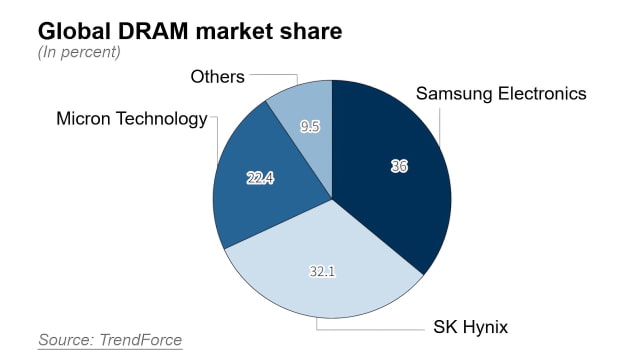
The three leading memory suppliers control roughly 90 percent of the DRAM market. They have increasingly prioritized high-bandwidth memory to support growing demand from AI data centers. As a result, prices for general-purpose memory used in smartphones and PCs have surged. Contract rates for the first quarter of 2026 are already up roughly 90 percent compared to the previous quarter.
This is creating a tough environment for consumer hardware. Memory typically accounts for about 20 percent of the manufacturing cost for entry-level smartphones, but that share is projected to hit nearly 40 percent by mid-2026. Research firm IDC expects this pressure to trigger a 13 percent drop in global smartphone sales this year as profitability deteriorates for lower-tier brands. The PC market is facing a similar squeeze, with warnings that laptop prices could jump significantly to offset the rising hardware expense.
Apple is navigating the shortage from a relatively strong position. While the company recently overtook Samsung to become the world's top smartphone maker, it also benefits from immense purchasing power. Analysts say Apple is willing to absorb the hit to its gross margins and keep prices steady for the upcoming iPhone 18 lineup. The company took a similar approach with its Mac lineup, recently launching the $599 MacBook Neo using repurposed A-series silicon to hit an aggressive price point in a tighter component market.
Expanding fabrication capacity takes time. Samsung's newest plant in South Korea is expected to come online in 2026, with full-scale mass production not expected until 2027 or later. SK Hynix is also accelerating construction on a new facility, while Micron continues to build out fabs across the United States, Japan, and Taiwan. Much of that additional output is not expected to reach the market until the second half of 2027 or beyond, and even after new fabs come online, it can take time to improve yields and reach full production efficiency. Industry executives have also warned that constraints in AI-focused memory could persist into the end of the decade as demand continues to outpace supply.
Get the iClarified Daily Newsletter
Apple news, rumors, tutorials, price drop alerts, in your inbox every evening, free.
Unsubscribe at any time.
Success!
You have been subscribed.
Add Comment
Would you like to be notified when someone replies or adds a new comment?
Yes (All Threads)
Yes (This Thread Only)
No
Notifications
Would you like to be notified when we post a new Apple news article or tutorial?




![Apple Releases visionOS 27.0.1 for Apple Vision Pro [Download]](/images/news/102459/102459/102459-160.jpg "Apple Releases visionOS 27.0.1 for Apple Vision Pro [Download]")
![Boot Speed Test: iPhone 18 Pro Max vs iPhone 17 Pro Max vs iPhone 16 Pro Max [Video]](/images/news/102462/102462/102462-160.jpg "Boot Speed Test: iPhone 18 Pro Max vs iPhone 17 Pro Max vs iPhone 16 Pro Max [Video]")
![Apple Releases macOS Golden Gate 27.0.1, Tahoe 26.7.1, and Sequoia 15.8.1 [Download]](/images/news/102456/102456/102456-160.jpg "Apple Releases macOS Golden Gate 27.0.1, Tahoe 26.7.1, and Sequoia 15.8.1 [Download]")
![Apple Releases iOS 27.0.1, iPadOS 27.0.1, and 26.7.1 Updates [Download]](/images/news/102453/102453/102453-160.jpg "Apple Releases iOS 27.0.1, iPadOS 27.0.1, and 26.7.1 Updates [Download]")


![How To Find Your iPhone IMEI Number [Video]](/images/tutorials/83557/83557/83557-160.jpg "How To Find Your iPhone IMEI Number [Video]")



![16-Inch M5 Max MacBook Pro Drops $900 to New Low of $3,499 [Deal]](/images/news/102438/102438/102438-160.jpg "16-Inch M5 Max MacBook Pro Drops $900 to New Low of $3,499 [Deal]")
![Magic Keyboard for iPad Air Drops to $200 on Amazon [Deal]](/images/news/102402/102402/102402-160.jpg "Magic Keyboard for iPad Air Drops to $200 on Amazon [Deal]")
![13-Inch M5 MacBook Air With 1TB Drops to $1,449 on Amazon [Deal]](/images/news/102345/102345/102345-160.jpg "13-Inch M5 MacBook Air With 1TB Drops to $1,449 on Amazon [Deal]")